
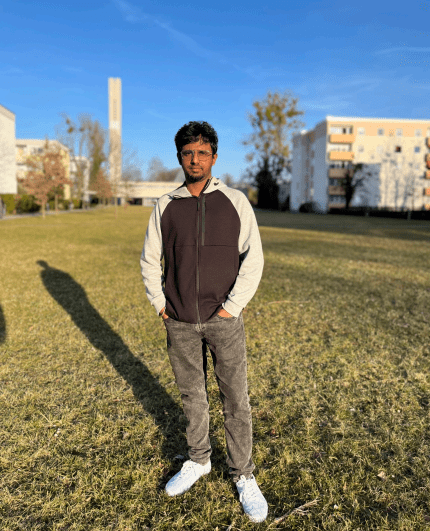
The path to a meaningful research career is rarely linear. It is shaped by curiosity, courage, and the willingness to step into the unknown. For Deepak Kumar Sundaramoorthy, currently a PhD student at ETH Zurich, the journey began with a strong foundation in molecular biology and gradually evolved into an exploration of neuroscience, specifically, understanding the role of non-coding RNAs in human cortical microcircuit formation.
With training in both molecular biology and neuroscience, his work sits at the intersection of two complex disciplines. Studying how non-coding RNAs influence the formation of cortical microcircuits requires not only technical expertise but also the ability to think across biological scales from molecules to neural networks. This interdisciplinary approach allows him to ask deeper questions about how the human brain develops and functions.
However, building expertise in two demanding fields did not come without challenges. Balancing molecular biology and neuroscience required adaptability and persistence. Each field has its own methodologies, conceptual frameworks, and technical skills. Navigating both simultaneously was demanding, but it strengthened his resilience. Rather than seeing the overlap as a burden, he embraced it as an opportunity to grow beyond traditional boundaries.
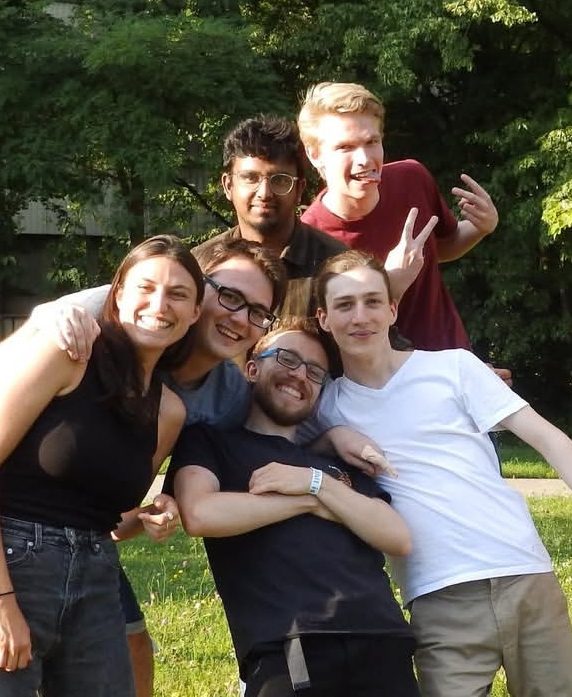
A defining turning point in his career was his decision to leave India to pursue his Master’s degree at LMU. Moving to a new country brings academic and cultural adjustments. It means rebuilding networks, adapting to new systems, and proving oneself again. Yet, this decision expanded his perspective and opened doors to advanced research opportunities that shaped his current trajectory.
Transitions can also bring uncertainty. When he shifted from molecular biology into neuroscience, self-doubt surfaced. Questions about competence and preparedness are natural when entering a new field. What helped him navigate this phase was mentorship. Supportive professors at LMU guided him through the transition, reinforcing a powerful lesson: asking for help is not a weakness but a strength. Seeking mentorship accelerates learning and builds confidence.
One decision he takes pride in is committing to challenging research projects that push him beyond his comfort zone. Growth often lies on the other side of discomfort. By choosing projects that demanded new skills and deeper thinking, he continuously expanded his capabilities.
His definition of success is refreshingly simple yet powerful: not quitting even when you have all the reasons to quit. In research, setbacks are inevitable: experiments fail, hypotheses collapse, timelines extend. Persistence becomes the defining trait that separates temporary frustration from long-term achievement.
Looking ahead, his aspiration goes beyond publications and discoveries. He wants to be a catalyst in the growth of students and early-career professionals, someone who helps turn fear into strength. By sharing his journey openly, he demonstrates that uncertainty, challenge, and struggle are not signs of inadequacy but essential parts of transformation.
From molecular biology labs to decoding neural microcircuits, his journey reflects a broader message: stepping outside your comfort zone, embracing mentorship, and refusing to give up can shape not just a career but a meaningful impact on others.
Have questions about your academic or career path? Get guidance directly from experienced mentors through our quick 10-Cent Mentoring Sessions designed to give you focused advice and clarity.
Book Your Session

Connect with Deepak Kumar Sundaramoorthy on LinkedIn
 Scholarscape